



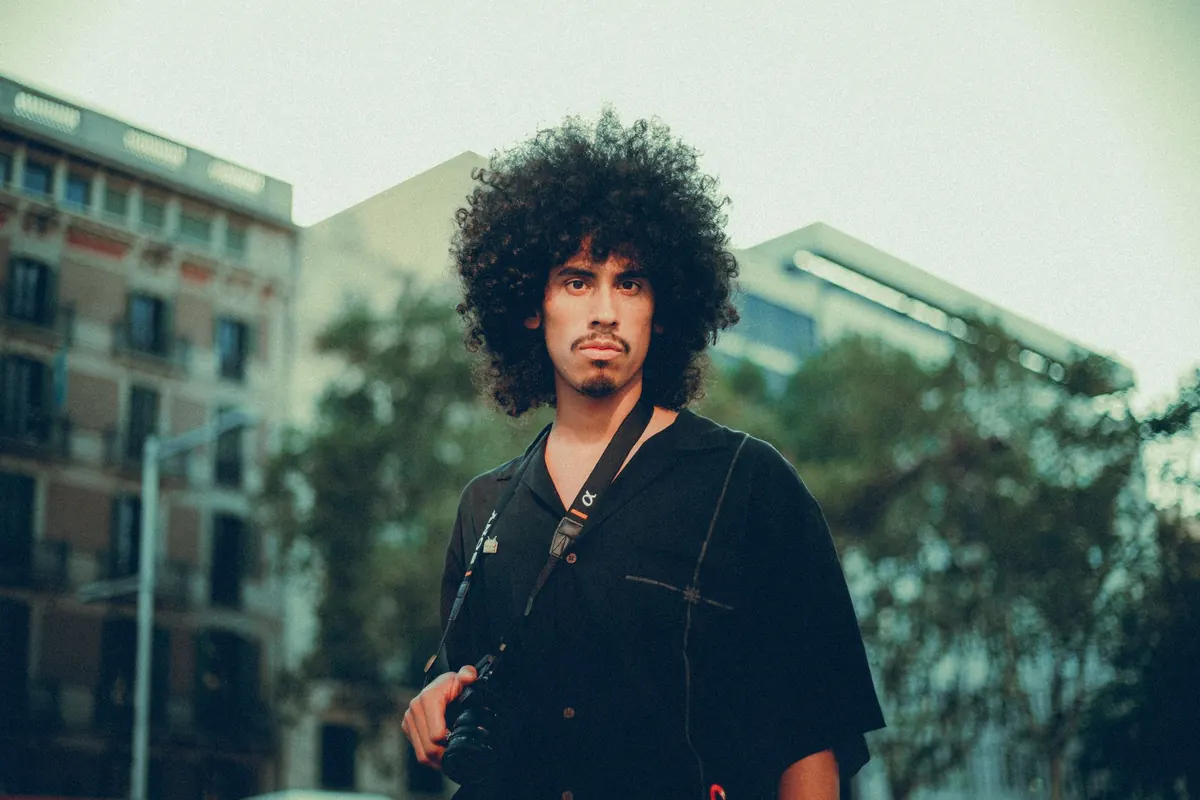
The first time you raise a camera in a crowded square, something awkward happens. A woman at the edge of your frame turns her head, a waiter steps out of the shot with a look on his face, and you suddenly feel less like a photographer and more like an intrusion. That feeling is worth listening to. Street photography in tourist cities is a negotiation between your curiosity and other people's right to get on with their day, and the photographers who do it well are rarely the ones with the biggest lenses. They are the ones who understand the room.
What follows is not a set of laws. Rules about photographing people in public vary from country to country and sometimes from city to city, so check local guidance if you plan to publish or sell your work. What follows is the everyday craft: how to move, when to ask, and how to leave a place feeling like you added something rather than took it.
People Are Not Props
Start with the mental shift. A market stallholder arranging tomatoes at seven in the morning is not set dressing for your travel album; she is at work. A couple arguing quietly on a bench is not a moody composition. The moment you start treating strangers as elements inside a frame you have already designed in your head, your behaviour changes — you hover, you lean in, you wait for them to stop noticing you.
The better approach is to photograph what is genuinely happening and accept that you are a guest in the scene. That means taking the shot when the moment is already there rather than arranging people into it. It also means being willing to lose the shot. Some of the best photographs you will ever see were never taken, because the photographer recognised that the person in front of them did not want to be photographed, and walked on.
A good street photograph should be something you witnessed, not something you extracted.
When a Face Is the Subject
There is a wide gap between a crowd scene where individuals are small and anonymous, and a close portrait where one person's face fills the frame. The first is usually fine with care. The second deserves a question.
Asking does not have to be a formal negotiation. A gesture works across most languages: catch the person's eye, raise your camera slightly, tilt your head in a question. If they nod, shoot and thank them. If they hesitate, smile, lower the camera and move on. If they shake their head, that is a complete answer and you accept it without a sigh.
If you speak even a few words of the local language, use them. "May I?" in the right language, delivered with a smile, does more than a long explanation in English. And when someone says yes, do not turn a single portrait into a fifteen-frame session. Two or three frames, show them the screen if they are curious, thank them properly, and go.
Ways to work without faces
Plenty of strong street images never show a recognisable face. Shoot from behind: a row of shoulders at a food stall, a woman walking a dog down a narrow alley, hands counting coins at a till. Use silhouettes, reflections in shop windows, feet on wet cobblestones, shadows stretching across a plaza. Shoot wide enough that people become part of the architecture. These images often feel more honest, because nobody in them was performing for you.
Reading the Room
Some situations call for the camera to stay down, no matter how good the light is. Build a mental checklist and use it as you walk.
- Children. Do not photograph children you do not know without a parent or guardian's clear agreement. If a parent is nearby, ask them first. If you cannot ask, do not shoot.
- Distress and vulnerability. Someone crying, injured, sleeping rough, or clearly unwell is not a subject. Step around them.
- Religious observance and ceremony. Places of worship often have their own rules about photography, and even where it is permitted, worshippers at prayer are not a backdrop. Watch what others are doing and follow it.
- Uniforms and security. Police officers, guards and staff at checkpoints are usually a bad idea, and in some places it is restricted. Ask if you genuinely need the shot.
- Private-feeling moments in public places. A couple's first argument of the holiday, someone taking a call with bad news, a person changing a baby. The location is public; the moment is not.
Learn to read the small signals too. A person who turns away, pulls up a hood, puts a hand over their face, or angles their body behind a friend is telling you something without speaking. Take the hint at the first sign, not the third.
Blending In Without Being Sneaky
There is a difference between being unobtrusive and being furtive, and people can feel it. Hiding a camera under a jacket, shooting from the hip while pretending to check your phone, or snapping from across the street and hurrying off all create the impression that you know you are doing something wrong. That impression is what makes people angry.
Instead, slow down. Sit on a step for ten minutes and let the street get used to you. Stand at the edge of a square rather than in the middle of it. Avoid the huge lens that announces you from fifty metres away; a small prime lens and a quiet shutter let you work close without becoming the main event. Wear what people around you are wearing. Keep your camera visible but relaxed, hanging at your side rather than held to your eye while you scan.
Timing helps too. Early morning, before the tour groups arrive, gives you clean light and calmer streets, and people are more forgiving when a city is not yet crowded. Late afternoon often brings the best light and the best scenes, but also the most company.
When Someone Objects
It will happen. Someone will notice you, frown and say something. How you handle the next thirty seconds matters more than the photograph.
Lower the camera. Make eye contact. Say a short, genuine apology — "Sorry, I'll delete it" is usually all that is needed. If they ask to see the screen, show them. If they ask you to delete, delete it in front of them. Do not argue about public space, do not explain the law, do not explain your artistic intentions. None of that is what the person wants to hear, and none of it is worth a confrontation in a city where you are a guest.
Then move on. Do not keep shooting the same corner, and do not stand nearby looking wounded. A quick, polite exit defuses almost every situation.
Five Habits to Take With You
None of this needs to make you timid. Etiquette and good photographs are not in conflict; in fact, respect usually gets you closer, because people let relaxed photographers in and shut out tense ones.
- Ask when the face is the subject, and accept the first answer.
- Shoot scenes, not strangers' bad days.
- Move slowly, sit still, and let a place settle around you.
- Delete on request without discussion.
- Put the camera down when the moment is more interesting to witness than to capture.
If you come home with fewer frames than you expected but no stories about angry locals, you have done it right. The best street photography in tourist cities tends to come from patience, a small camera and the simple habit of treating every person in your frame as someone with somewhere to be.
Photo: El gringo photo / Pexels
Related posts
More stories you’ll love reading