




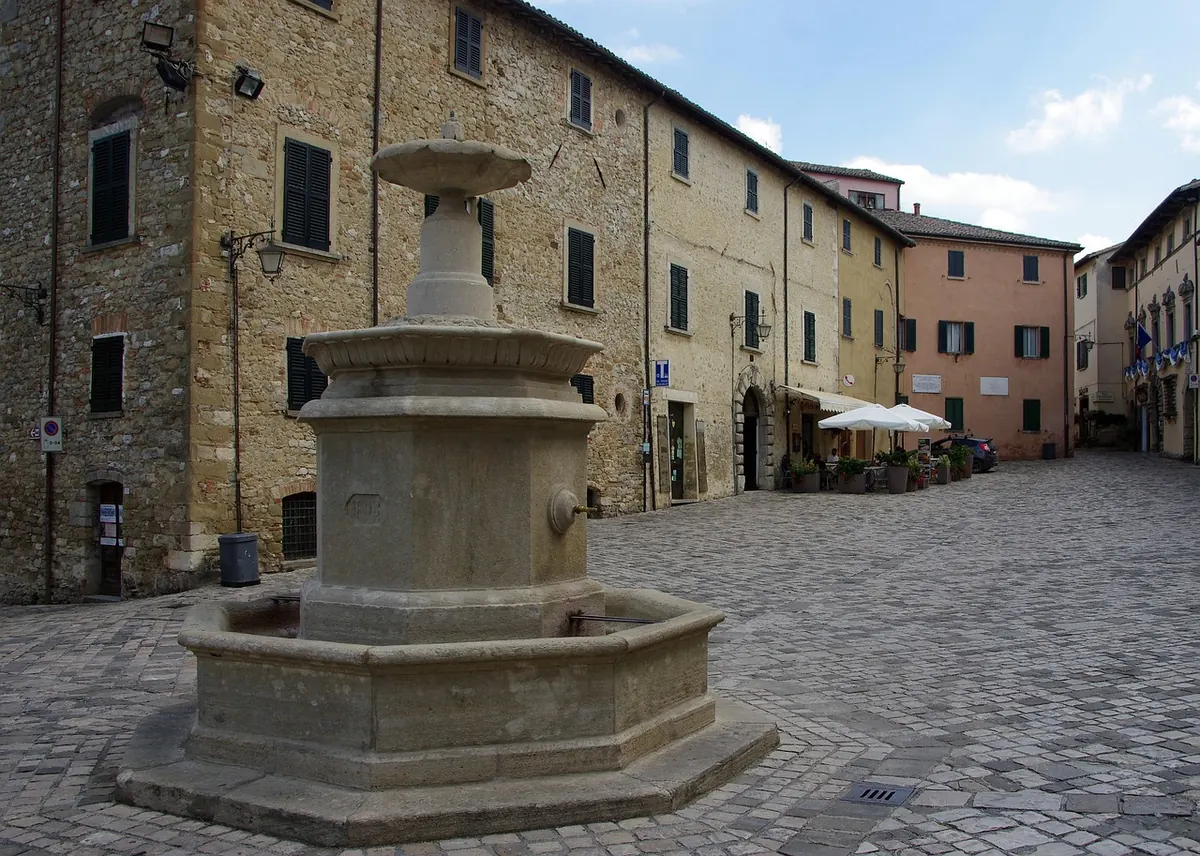
There is a particular kind of Italian town where the loudest sound at nine in the morning is a metal shutter going up. One bar, one piazza, a church whose bell runs a minute fast, and a shop that sells nothing you can neatly categorise. Such places are not hard to find. Choosing one well, arriving at the right moment, and then resisting the urge to fill every hour — that takes a little planning. What follows is a method refined by the sort of mistakes that make good stories later and bad weekends at the time.
Choose the town by shape, not by photograph
Most people start with an image: a stone alley, a terrace, a view. Images are a fine filter for desire and a poor filter for a weekend. Start instead with three practical questions about the town itself.
Can you cross the centre on foot in fifteen minutes? If yes, you have a town you can learn in a weekend. If the historic core is a single street strung along a highway, you will spend the whole time walking to and from the car.
Is there a station? A small station on a regional line is a gift: you arrive without a car, and the walk from platform to piazza becomes the first thing you do. No station is fine too, but be honest about whether you want to drive narrow roads after a long lunch.
Does it have the four things? This is the most useful filter I know:
- A bar that opens before eight, where people stand at the counter and talk.
- A bakery that sells bread by the loaf, not just filled rolls.
- A small grocery or alimentari, for whatever you forgot.
- A pharmacy, because at some point someone will need one.
Anything else — a museum, a castle, a famous view — is a bonus. Those four are the difference between a town that works and a town that is merely photogenic. One more search saves trouble: look up the town's name together with sagra and festa patronale. A patron saint festival will fill every room and every table for two or three days. That can be the best weekend of your year, or the worst, depending on whether you knew beforehand.
Time the visit against the town's calendar, not yours
Small towns have their own weather systems of open and closed, and they rarely match the tourist season. Two rules cover most of it.
Avoid August. Not because Italy is unbearable — though the afternoons can be — but because August empties these places of the people who make them feel like themselves. The baker goes to the sea. The good trattoria closes for a fortnight. Meanwhile the towns that are usually quiet fill with returning families and the prices that follow them.
Aim for the shoulders. Late April to mid-June and September to mid-October give you open shops, human temperatures, and a piazza where you can sit without negotiating for shade. Late spring is greener; autumn has the better food.
Then there is the shape of the week. A Tuesday-to-Friday visit is the quietest option available: the weekend crowds have gone, the town has settled into its ordinary temper, and you get the market without the queue. Check three things before you book anything:
- Public holidays and long weekends — 25 April, 1 May, 2 June, Easter Monday, 1 November, 8 December, and above all 15 August.
- Monday closures. Many small restaurants and some museums shut on Mondays, and Sunday evening can go quiet earlier than you expect.
- The last train or bus out, so the end of the weekend is not a small panic.
One town, one base, no reshuffling
The most common way to ruin a slow weekend is to plan three towns in two days. It looks efficient on paper and feels like a relay race in practice. Choose one town as your base and let the surrounding area be an option rather than an obligation.
If you are coming by train, pick somewhere reachable with a single change, and accept that the last leg will be a regional service stopping at stations with one bench. That is not a flaw in the plan; it is the plan. If you are driving, book accommodation with parking included, then leave the car where it is for the entire weekend. A car that stays parked is a promise you have made to yourself.
A weekend in a small town is not a shorter holiday. It is a different unit of time.
Build each day around two anchors
The temptation, once you have arrived somewhere charming, is to fill it. Resist. Give each day exactly two fixed points — one in the morning, one in the late afternoon — and leave everything between them deliberately empty.
Good anchors come from the town rather than from a list: the market on its proper day, the walk to the viewpoint above the rooftops, a church with a fresco you have read about, a long lunch booked for one o'clock, the train to a neighbouring village that gives you two hours there. What makes an anchor work is that it has a time attached. "See the castle" is not an anchor. "Be at the castle gate at ten, before the coach parties" is.
Two anchors also protect you from the classic small-town mistake: arriving at two in the afternoon expecting lunch. In many places the kitchen closes around half past two and does not open again until seven or eight. Plan the middle of the day around that gap rather than against it — a book, a shaded bench, a nap with the shutters closed.
Follow the town's rhythms instead of a checklist
Once the anchors are set, the day fills itself. The pattern is remarkably consistent across regions.
Morning belongs to the bar. Stand at the counter, order a coffee, stay for ten minutes. This is when you learn which church is open, whether the bakery has a queue for a reason, and where the good table is.
Late morning is the market and the walk. Buy fruit you cannot name. Ask for a slice of something. Take the steep street that appears to go nowhere in particular.
Early afternoon is lunch and quiet. Shutters come down, the piazza empties, and nothing is expected of you.
Evening is the passeggiata, the slow walk that is not really a walk. Join it without a destination, then take an aperitivo, then dinner, then cross the same piazza you have crossed three times already, now in different light and among different people.
For eating, use two signals instead of reviews: a short menu, and a room with locals in it at half past twelve. If the menu runs to forty dishes, keep walking. If you cannot get a table on a Tuesday, you have found something. Book in the morning for the places that look small and busy.
Before you go: a five-minute check
Confirm that your accommodation sits in the town itself rather than on its industrial edge. Screenshot the last return train. Note the pharmacy's hours. Write down one anchor for each day and leave the rest blank. Then put the phone away once you reach the piazza — the town is small enough that you will not stay lost for long, and being slightly lost is most of the pleasure.
Photo: DEZALB / Pixabay
Related posts
More stories you’ll love reading